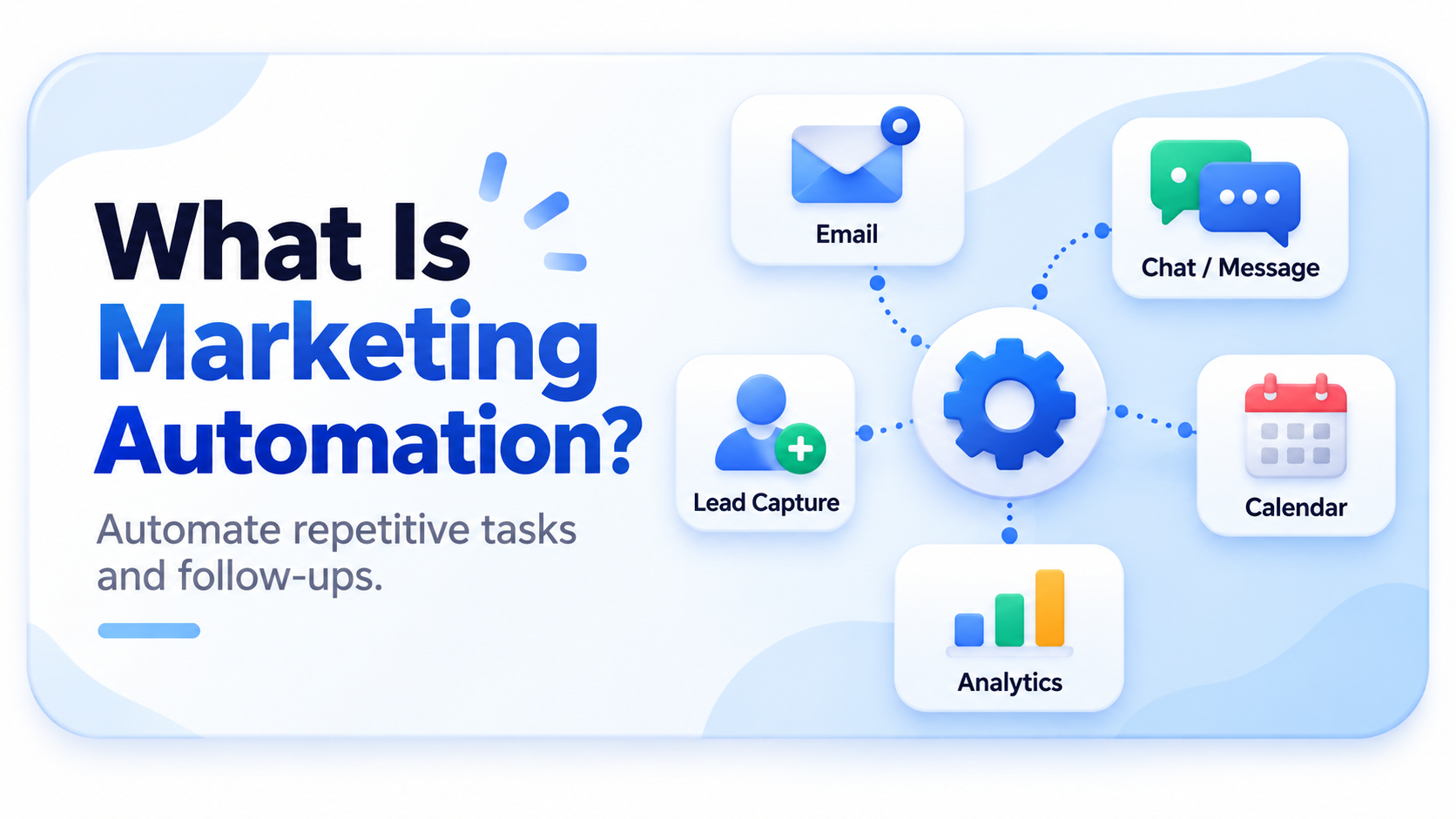
How Marketing Automation Works
Marketing automation works by creating rules around customer actions. When a specific action happens, the system automatically performs the next required step.
Marketing platforms such as Salesforce offer tools that help businesses manage marketing campaigns, customer journeys, and automated communication based on customer behavior.
Why Businesses Use Marketing Automation
Businesses use automation to improve response times, reduce manual work and create more consistent communication with prospects and customers.
Faster Lead Response
Instead of waiting for a team member to manually reply, a new lead can receive an immediate response.
Consistent Follow-Up
Automated workflows help make sure every lead receives the same follow-up process.
Better Lead Organization
Leads can be automatically tagged, assigned, segmented and moved through CRM pipelines.
Common Marketing Automation Examples
Some of the most common automation workflows include:
- Lead follow-up
- Email nurture campaigns
- SMS reminders
- Appointment confirmations
- No-show follow-up
- Review requests
- Customer onboarding
For example, platforms such as ActiveCampaign help businesses create automated email sequences, organize contacts, and send personalized follow-up messages based on customer activity.
Does Automation Replace People?
The goal of automation is not to remove human interaction. It is to automate repetitive administrative work so your team can spend more time on conversations, strategy and customer relationships.
Final Thoughts
A good marketing automation system connects your website, CRM, communication tools and sales process so that important actions happen automatically at the right time.
At UFOTOMATION, we help businesses build practical automation workflows that simplify lead management and everyday customer communication. Explore our CRM automation services to learn how we can help connect your business tools and processes.